
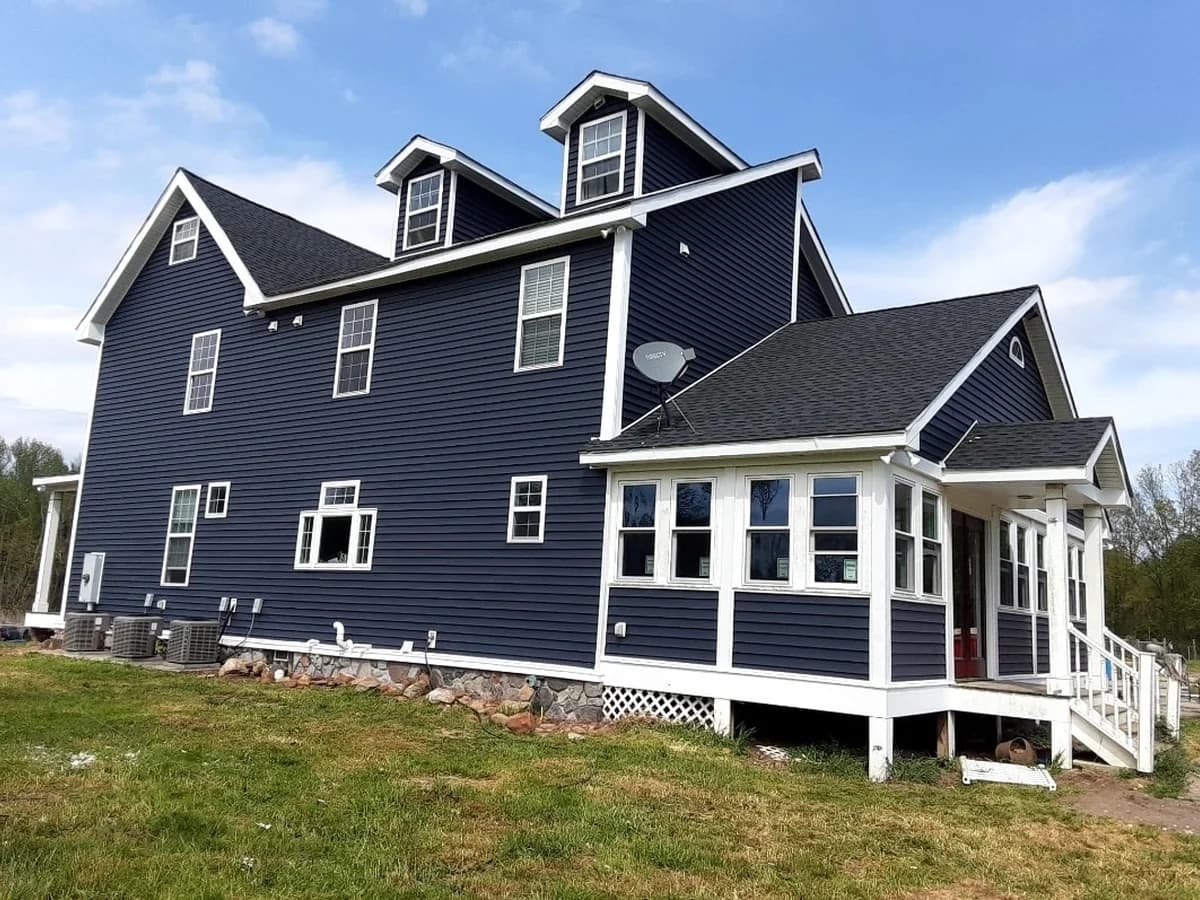
Start with what changed
A loose panel after wind is different from siding that keeps bowing, cracking, or pulling away in the same area. Look for the first thing that changed: impact damage, missing trim, water stains, open seams, soft fascia, gutter overflow, or siding that has moved around a window or corner.
When a repair may be enough
A repair can make sense when the damage is limited, the surrounding siding is still solid, the profile and color can be matched closely, and there is no sign of water getting behind the wall. Small sections, loose corners, missing J-channel, cracked panels, and isolated trim problems can often be handled without replacing every side of the house.
When replacement starts to make more sense
Replacement becomes a better conversation when several sides of the home are faded, brittle, loose, or patched in many places. It also makes sense when old siding is hiding water damage, when trim details were installed poorly, or when the homeowner wants to solve siding, soffit, fascia, gutters, and window trim at the same time.
The trim tells the truth
Corners, window trim, fascia, soffit, and utility blocks usually show problems before the large wall panels do. If trim is open, soft, loose, or stained, the siding issue may not be cosmetic. That is why we ask for close-up photos of corners, windows, doors, gutters, rooflines, and places where the siding meets another material.
Water problems should move up the list
Water behind siding can turn a small repair into sheathing damage, rotten trim, or interior issues. Staining under gutters, soft fascia, repeated leaks around windows, and siding that swells or waves should be checked sooner. Waiting rarely makes a water problem cheaper.
Color matching can limit repair options
Older siding can fade from sun and weather, so a new repair panel may not match perfectly even if the product line is correct. Sometimes the best repair is on a less visible side. Other times, the honest answer is that a full side or full replacement will look cleaner than a patch.
What photos help us answer faster
Send one wide photo of each side of the house, then close-ups of the damaged area, corners, windows, fascia, soffit, gutters, and any loose pieces. If you know the siding brand, profile, or color, include that too. Good photos help us tell you what looks urgent and what can wait.
A practical way to decide
If the problem is small, dry, and easy to match, repair may be the right move. If the damage repeats, involves water, affects trim or roofline details, or covers multiple elevations, replacement may save money and frustration later. The right answer depends on the house, not a sales script.