
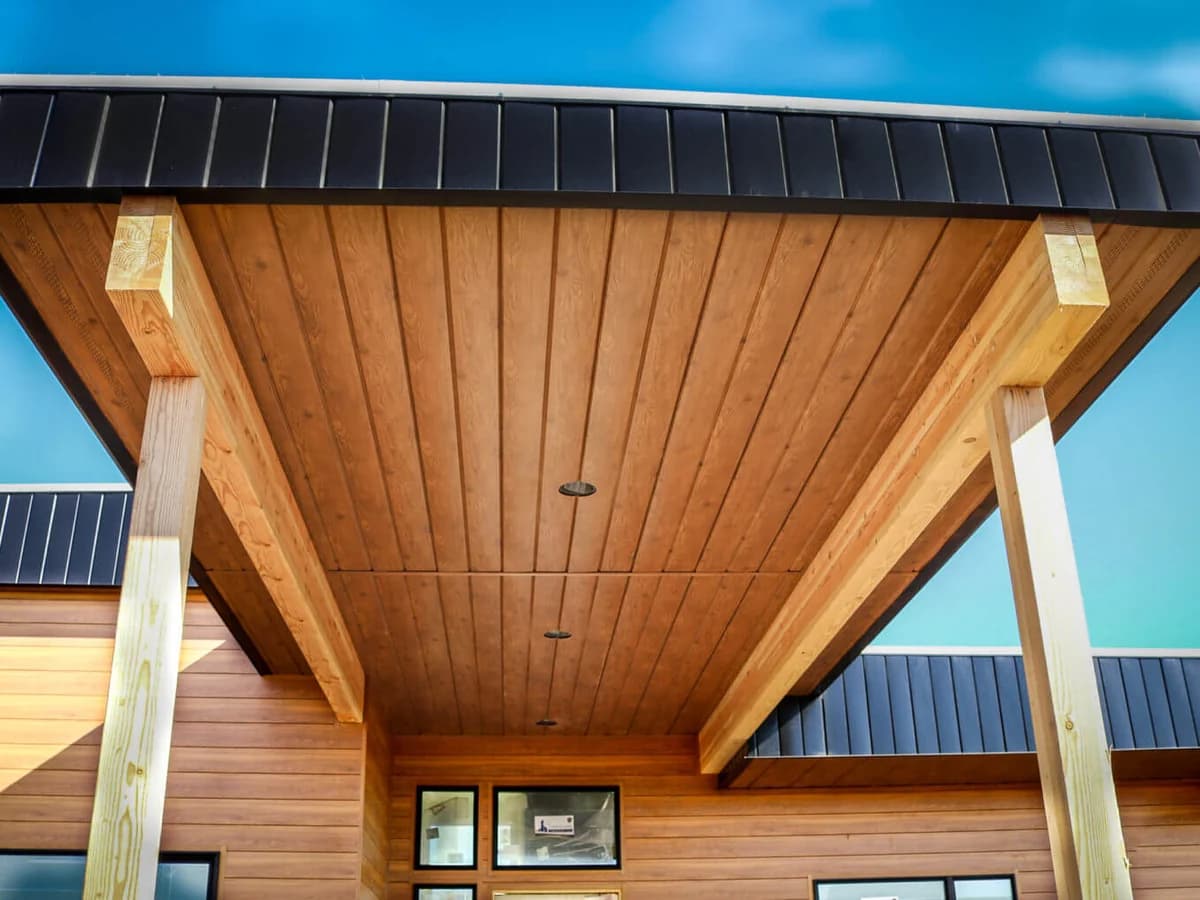
Why the roofline matters
Soffit helps the attic breathe, fascia protects the roof edge, and gutters move water away from the house. When those pieces fail, water can stain siding, rot trim, loosen gutters, and create problems around windows, doors, and corners.
Signs fascia may be failing
Look for soft spots, peeling finish, open seams, dark staining, gutter screws pulling out, or a wavy gutter line. Fascia damage often shows up after gutter overflow, roof edge leaks, or years of water sitting against the same board.
Signs soffit needs attention
Loose soffit panels, missing vents, sagging sections, animal entry points, and stains under the overhang should be checked. A soffit repair is not just about appearance. It can affect ventilation and the way the roof edge handles moisture.
Gutters can cause siding problems
When gutters overflow, leak at corners, pitch the wrong way, or dump water too close to the wall, the siding and trim below take the hit. Water marks under a gutter are often telling you to look higher, not just at the stained siding.
Do not cover rot without fixing the cause
Wrapping bad wood or covering a wet problem can hide damage instead of solving it. If fascia or trim is soft, the damaged material should be addressed before new wrap or finish pieces go on. A clean exterior starts with a solid surface.
When to pair roofline work with siding
Soffit, fascia, gutters, and siding connect at corners, gables, windows, and roof edges. If you are already replacing siding, it is often smarter to review the roofline at the same time so the finished exterior looks clean and handles water correctly.
What to send before a visit
Send wide photos of the front, sides, and back of the house, then close-ups of gutter corners, fascia boards, soffit panels, downspouts, stains, and any areas pulling away. Include photos after rain if water is spilling or pooling.
What can wait and what should not
A small cosmetic dent may wait. Active leaks, soft fascia, loose gutters, open soffit, and water entering behind siding should move up the list. The longer water stays involved, the more parts of the exterior it can reach.